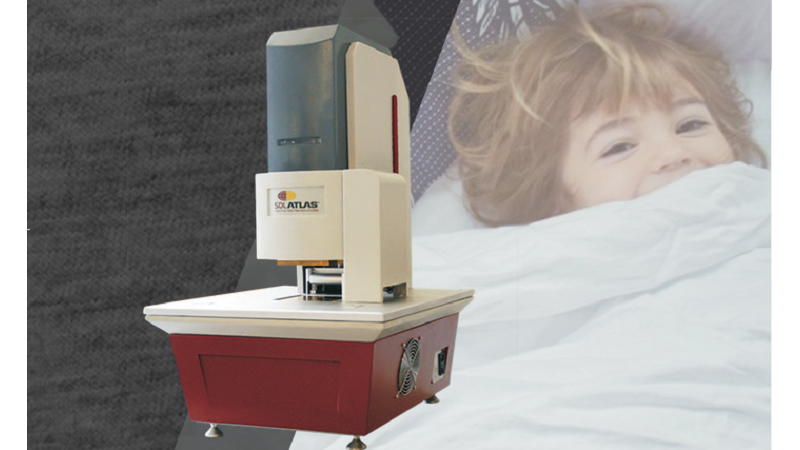
The global textile supply chain in 2026 is more complex and faster than ever before. A single garment might be designed in London, the fabric sourced from a mill in Vietnam, and the final product sold in a flagship store in New York. To maintain a unified standard of quality across these borders, the industry relies on a “universal language” provided by fabric testing instruments. These specialized textile testing instruments allow for the empirical verification of fabric performance, ensuring that a brand’s promise of quality is upheld regardless of where the material was manufactured. Without these tools, the risk of massive product recalls and brand damage would be a constant threat to the bottom line of global retailers.
Standardizing Performance Metrics in a Digital Age
The primary function of fabric testing instruments is to simulate the real-world conditions a garment will face throughout its lifecycle. Will the colors fade under intense sunlight? Will the seams burst during a high-intensity workout? Will the surface of a luxury wool coat pill after only three wears? To answer these questions, modern laboratories utilize a variety of textile testing instruments that apply controlled stress to material samples. However, the 2026 standard for these instruments has shifted from simple mechanical operation to digital precision.
For instance, air permeability is a critical metric for both high-performance sportswear and medical-grade PPE. A high-end textile testing instrument like the AirFicient measures the rate of airflow through a fabric under specific pressure drops. Because these fabric testing instruments are built to meet international standards (ISO 9237, ASTM D737), the results are recognized by regulatory bodies worldwide. This standardization allows manufacturers to prove the functional claims of their textiles—such as “breathable,” “water-resistant,” or “high-tenacity”—with scientific data rather than subjective marketing descriptions. By providing a “digital fingerprint” of the fabric’s performance, these instruments facilitate smoother trade and faster approval cycles between suppliers and buyers.
The Efficiency of Automated Workflows and SmarTexLab
In a high-volume production environment, speed is just as vital as accuracy. Manual fabric testing instruments are inherently slow and depend heavily on the skill and consistency of the individual operator. Modern textile testing instruments are designed to be “User-Friendly” and highly automated, reducing the “human factor” that often leads to data variability. ChiuVention’s SmarTexLab ecosystem is the pinnacle of this automation, allowing for “one-touch” operation across the entire laboratory floor.
Once a fabric sample is loaded into one of the fabric testing instruments, the machine handles the rest—from selecting the pre-programmed testing standard to generating a final, digitally signed PDF report. This automation extends to sample tracking through the use of RFID tags. When a technician brings a sample to a textile testing instrument, the machine automatically identifies which batch it belongs to and pulls the correct testing parameters from the cloud. This reduces the time spent on manual setup and data entry by up to 50%, allowing a single technician to manage multiple fabric testing instruments simultaneously. For a large-scale factory, this means higher throughput in the lab and a much faster feedback loop for the production line, ensuring that any quality issues are identified and corrected before thousands of meters of fabric are wasted.
Ensuring Consistency through High Reproducibility
For major apparel retailers, the most important trait in a supplier is not just high quality, but consistent quality. They need to know that every roll of fabric in a 10,000-meter order is identical to the last. This requires fabric testing instruments that offer “high reproducibility”—the ability to yield the exact same results across different machines, different operators, and different geographic locations.
Leading textile testing instruments manufacturers achieve this through advanced precision engineering and digital calibration. By minimizing mechanical friction and using high-resolution digital control systems, they ensure that the forces applied to the fabric are perfectly consistent. When a brand sees that its global suppliers are using standardized fabric testing instruments connected to a system like SmarTexLab, it builds a level of trust that facilitates long-term, multi-year partnerships. In an industry where a single defective batch can cost a company millions in returns and lost consumer trust, the investment in high-quality textile testing instruments is the most effective form of insurance a manufacturer can buy. Ultimately, these instruments turn the “art” of textile making into a repeatable, scalable, and highly profitable science.