Alright, let’s cut to the chase. It’s December 2025 and half of Australia is about to pack up and leave their homes vacant for the holidays. While you’re figuring out how to cram three weeks’ worth of luggage into a carry-on, the opportunists are mapping out their own holiday plans and your empty house is looking like a prime destination. The old model of home security, a loud siren and a prayer, is fundamentally broken. It’s a dumb system for a smart world.
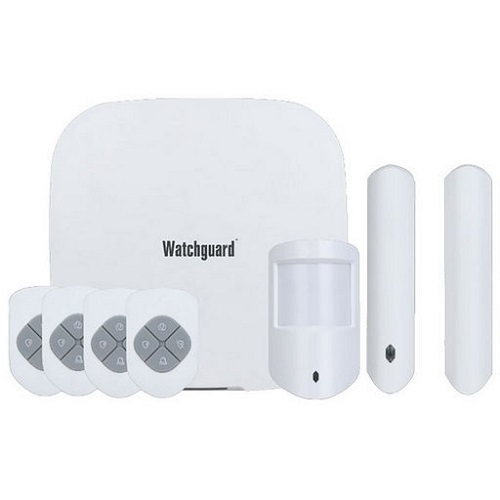
For years, Campad Electronics has been a quiet but consistent player in the Australian electronics space, outfitting the country with everything from mobile accessories to more serious hardware. They’ve built a reputation not on flashy marketing, but on providing quality gear that actually works. Now, they’re pushing a solution that aims to drag home security out of the dark ages: a lineup of DIY alarm systems. Specifically, the Watchguard Force Wireless WiFi and 4G Alarm Pack and the more robust Watchguard Wireless WiFi Alarm and 4G Signal Kit. This isn’t just about making noise; it’s about giving homeowners data and control.
The Achilles’ Heel of Dumb Alarms: The Network
Here’s the dirty little secret of most “smart” home security systems: they’re only as smart as their internet connection. A simple WiFi outage, whether from a storm or a pair of wire cutters, turns your high-tech shield into a plastic paperweight. This is the critical vulnerability that Watchguard is directly targeting.
Both of these systems operate on a dual-network framework. Yes, they connect to your home WiFi like everything else. But their crucial second act is a 4G cellular backup. When, not if, your WiFi fails, the system doesn’t just die. It pivots to the 4G network, maintaining a constant connection to the outside world. With a SIM card inside, it can still send you SMS alerts about a power cut, a sensor trip or any other anomaly. This isn’t a nice-to-have feature; it’s the entire point. It’s the redundancy that transforms the system from a fragile gadget into a resilient security tool. Without it, you’re just security-cosplaying.
Forget the Installer, This Isn’t 1998
The other piece of friction in the security industry has always been the gatekeepers. You used to have to call a professional, schedule a pricey installation and then get locked into a multi-year monitoring contract that bled you dry month after month. That business model is obsolete.
Watchguard’s systems are built on a DIY ethos. The components are wireless. You don’t need to be an electrician or a carpenter to set it up. You stick sensors to walls, plug in the hub and sync it with an app. This isn’t just about saving a few bucks on an installer; it’s about democratizing access to real security. By removing the professional-services barrier and the recurring subscription fees, companies like Campad Electronics are betting that people are smart enough to manage their own security. It’s a bet on user autonomy and it’s the right one to make.
The system is managed through the Smart Life app, which is a fairly standard, if uninspired, piece of software that gets the job done. You can arm, disarm and check statuses from your phone. More importantly, it integrates with the dominant ecosystems of Google and Amazon. So, you can bark commands at your smart speaker to arm the system as you walk out the door. It’s the kind of seamless integration that moves a device from a chore to a natural part of your daily routine.
Building Your Own Security Stack
A security system isn’t a single product; it’s a platform. The base kits, the Watchguard Force Pack and the Signal Kit, are just the starting point. The real power comes from the ecosystem of accessories you can bolt on. This is where you move from basic intrusion detection to a multi-layered, data-rich security posture.
The menu of available accessories is exactly what you’d expect, but the execution matters.
- PTZ (Pan-Tilt-Zoom) Camera: This is the most critical add-on. An alarm without visual verification is just noise. The Watchguard PTZ camera provides Full HD video, night vision and two-way audio. If a sensor is tripped, you can immediately pull up a live feed, see who or what is there and make an informed decision instead of panicking.
- PIR and Reed Sensors: These are the grunts of your security army. You need magnetic reed switches on every ground-floor door and window. You need PIR (Passive Infrared) motion sensors covering key hallways and rooms. The outdoor PIR sensor is notable for its pet immunity, an algorithm designed to ignore your dog while still catching a human-sized intruder. It’s not foolproof, but it’s a necessary filter to reduce the noise of false alarms.
- Strobe Siren: While data is king, a loud deterrent still has its place. The outdoor strobe siren is designed to create chaos for an intruder. A 115-decibel siren and flashing light draw immediate and unwanted attention.
- Beyond Burglary: Smart security isn’t just about intruders. You can add wireless smoke detectors that leverage the same hub and app. If a fire starts while you’re away, you get an immediate alert on your phone, which could be the difference between a small incident and a total loss.
- Perimeter Control: The Solar-Powered IR Multi-Beam Sensor is an interesting piece of kit for the truly paranoid (or the truly prudent). It creates an invisible infrared fence along a property line, driveway or balcony. It’s a proactive layer of defense, alerting you before someone even touches your house.
The Bottom Line
Let’s be clear. No security system is going to make your home an impregnable fortress. But the goal isn’t to build a fortress; it’s to make your home a harder, less attractive and more complicated target than your neighbour’s. It’s about shifting the risk calculation for an intruder from “easy score” to “too much trouble.”
As Australians prepare to scatter for the holidays, leaving a trail of empty homes behind, the question of security becomes urgent. The old, passive systems are no longer sufficient. You need something smart, resilient and connected.
The Watchguard systems, offered by a trusted name like Campad Electronics, represent a pragmatic and powerful step in the right direction. They are built on a foundation of network redundancy and user control and they are expandable enough to create a genuinely layered defence.
Don’t wait until you’re at the airport to start worrying about your home. The time to act is now. This is your chance to upgrade from a dumb alarm to a smart security platform before you leave. It’s a small investment in data, control and peace of mind. And in 2025, that’s the only currency that really matters.