Building Smarter Production Environments
Industrial manufacturing is changing as businesses adopt new technologies to improve production speed, product consistency, and operational control. Traditional manufacturing methods often depend on manual processes and equipment that require frequent adjustments. Although these methods remain useful in many situations, modern production environments increasingly rely on automation to handle repetitive tasks and maintain predictable results.
Automation does not simply mean replacing workers with machines. It involves connecting equipment, software, sensors, and production systems so that different stages of manufacturing can operate more efficiently. For example, automated material handling can reduce unnecessary movement across a factory, while computerized monitoring systems can identify production problems before they become serious.
Manufacturers are also using automation to improve workplace safety. Machines can perform tasks involving extreme temperatures, heavy materials, or repetitive movements, reducing the physical demands placed on employees. Workers can then focus on supervision, quality control, equipment maintenance, and process improvement.
Selecting Materials for Automated Equipment
Automation systems depend on reliable physical components. Even advanced software cannot compensate for equipment that fails under demanding operating conditions. Manufacturers must therefore evaluate the materials used in heating assemblies, measurement systems, processing chambers, and other specialized machinery.
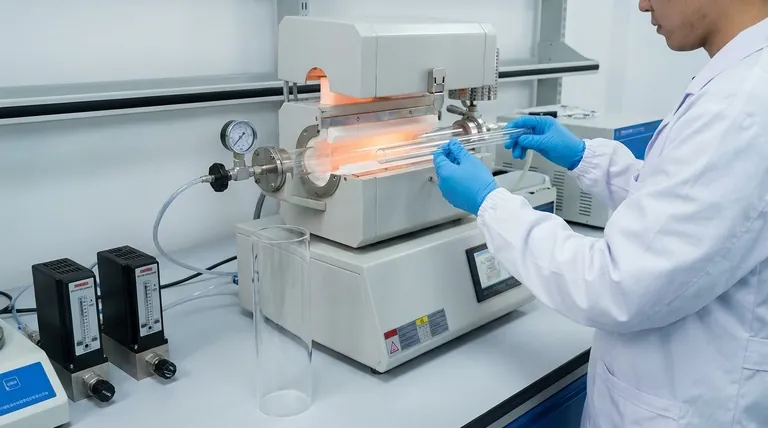
In high-temperature applications, material selection becomes especially important. Components must tolerate repeated heating and cooling without losing their essential properties. Engineers may consider large diameter fused quartz tubes when designing equipment that requires thermal stability, chemical resistance, and dependable performance in controlled environments.
Some automated industrial processes also require components manufactured to specific dimensions. Standard parts may not always fit specialized equipment, particularly when production systems involve unusual chamber sizes or customized heating arrangements. In these situations, engineers evaluate the operating temperature, mechanical requirements, and expected service life before selecting suitable components.
A well-designed automated system combines compatible materials with accurate controls. This approach helps prevent unnecessary equipment interruptions and supports consistent production quality.
Improving Accuracy Through Connected Systems
One major advantage of industrial automation is the ability to monitor production conditions continuously. Sensors can measure temperature, pressure, vibration, speed, and other important operating variables. These measurements provide useful information about equipment performance and allow operators to respond when conditions move outside acceptable limits.
Connected monitoring systems can also support predictive maintenance. Instead of waiting for a machine to fail, maintenance teams can review performance data and identify early signs of wear. A motor showing unusual vibration, for example, may need inspection before it causes an unexpected production stoppage.
Accurate monitoring is particularly valuable in industries where small variations can affect the final product. Electronics manufacturing, chemical processing, and precision engineering all depend on controlled production environments. Automated systems help maintain those conditions by reducing the possibility of inconsistent manual adjustments.
However, automation only produces reliable results when sensors are calibrated correctly and measurement data is interpreted properly. Regular inspection and maintenance remain essential parts of a successful automation strategy.
Training Employees for Modern Production Roles
As factories become more automated, employee responsibilities also change. Workers increasingly need technical knowledge related to machine operation, digital monitoring, troubleshooting, and production data. Companies that invest in training can help employees adapt to new equipment while reducing dependence on a small number of specialists.
Training should begin before major automation systems are introduced. Employees need to understand how equipment operates, what safety procedures apply, and how to respond when an automated process stops unexpectedly. Practical exercises can help workers become familiar with control panels, alarms, and maintenance requirements.
Manufacturers should also encourage communication between engineering, production, and maintenance departments. Automation projects often involve several technical disciplines, so decisions made by one team can affect the work of others.
A workforce that understands both manufacturing principles and digital systems can contribute valuable ideas for improving productivity. Employee experience remains important even when machines perform many routine operations.
Planning for Long-Term Industrial Growth
Automation projects should be evaluated according to their long-term value rather than their initial technical appeal. A company may purchase advanced machinery but struggle to achieve meaningful improvements if the equipment does not match its production requirements.
Before investing, manufacturers should identify the processes that create the greatest delays, quality problems, or operating expenses. They can then determine whether automation is appropriate for those areas. A gradual implementation strategy may be more practical than replacing an entire production system at once.
Businesses should also consider equipment compatibility, maintenance availability, software updates, and future expansion. Systems designed with flexibility can accommodate changes in product design or production volume more easily.
Industrial automation will continue to influence how products are manufactured. Companies that combine suitable technology, dependable materials, employee training, and careful planning will be better positioned to improve efficiency and respond to changing market demands.


